What paws can tell us, and what they don’t
In nature, nothing is truly repeated. Patterns return, shapes echo one another, but the result is always slightly different. Human fingerprints are unique. A giraffe’s coat forms a pattern that belongs only to that one animal. Zebra stripes never align the same way twice. Even leaves on the same tree grow with subtle differences. Uniqueness is not something nature announces. It simply exists.
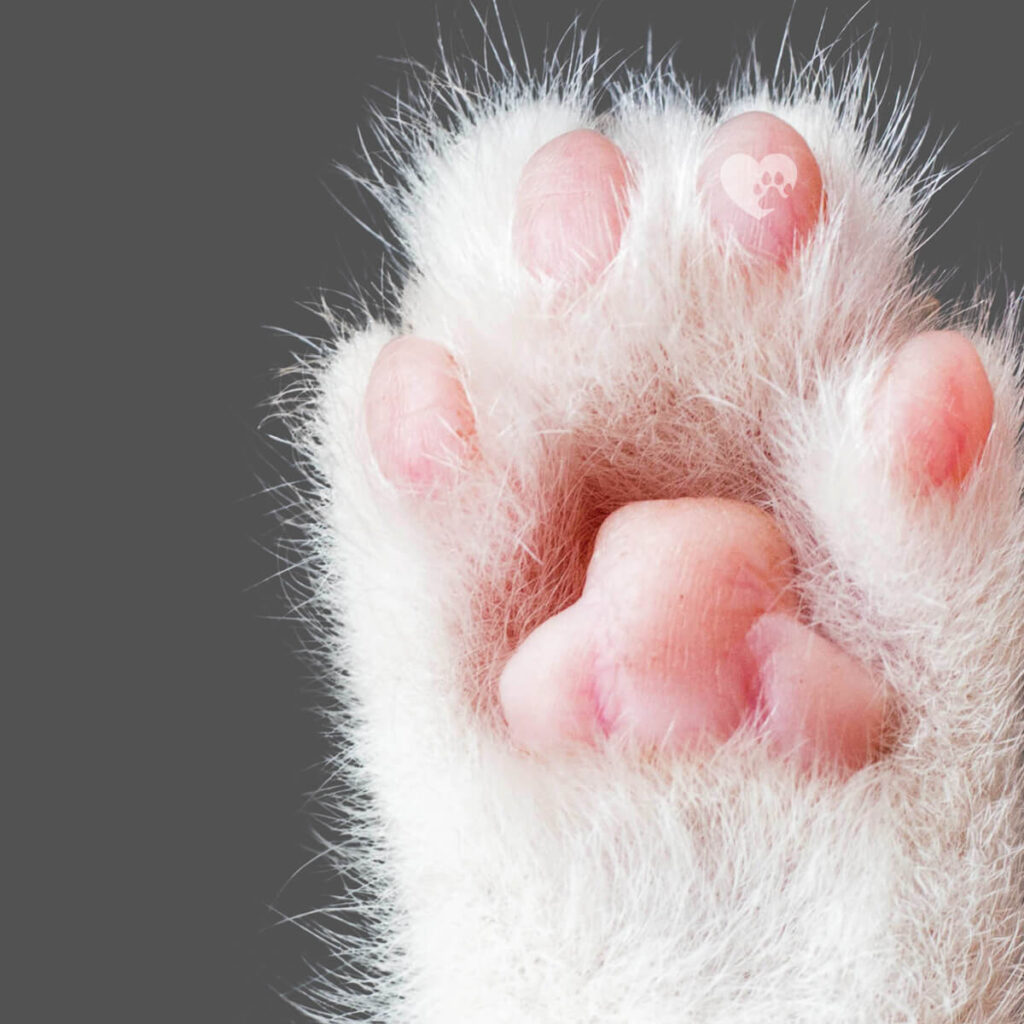
Cats are no exception. No two cats move the same way, rest the same way, or experience the world in exactly the same manner. Their individuality is quiet, expressed in habits, rhythms, and small details we often overlook. One of those details is hidden in plain sight, in the soft pads of their paws. Cats do not recognise paw prints visually the way humans recognise fingerprints. They recognise what is left behind through scent, not shape.
When a cat walks through a space, it does more than touch the ground. Paw pads contain scent glands, and every step leaves behind a faint chemical trace. To another cat, this trace does not describe the outline of a paw or the spacing of toes. It simply says that someone was here. Familiar or unfamiliar. Recent or old. Safe or uncertain. This is how cats experience the world. Not through records or labels, but through presence. They do not analyse or catalogue. They sense and respond. What matters is not exact identity, but context. Is this place known? Has something changed? Does this feel familiar?
From a human perspective, we like uniqueness to be proven. Fingerprints, DNA, serial numbers. Nature does not work that way. It repeats rules, not outcomes. No two cats have exactly the same paws, just as no two cats leave the same trace behind. And yet, cats do not need proof of individuality. It is already built into how they live. Caring for cats means learning to respect this kind of simplicity. Not everything needs to be measured, optimised, or made more complex. Biology already knows what it is doing. When we interfere less and observe more, understanding often comes naturally. The same is true for food. Cats are individuals, but their biology is not flexible. Respecting their nature means providing what their bodies are built to use, without adding things they do not need. Sometimes care is not about doing more. It is about knowing when to stop.
Caring starts by noticing the marks your cat leaves, even when we don’t see them.

Did you know?
Most cats have a dominant paw, just like humans are left or right handed. Research from Queen’s University Belfast found that around three quarters of cats consistently prefer one paw over the other. Male cats tend to favour their left paw, while females tend to favour their right. You can test this at home. Watch which paw your cat uses first when stepping into the litter box, reaching for a toy, or testing something unfamiliar. The paw that goes first is usually the dominant one, and it rarely changes.