Breed, coat type and early experience all matter
Cats are often described as animals that hate water, but the reality is more nuanced. While many domestic cats avoid getting wet, water aversion is not a universal feline trait. Some cats enjoy watching water move, playing with dripping taps, or even getting fully wet. As with many aspects of cat behaviour, genetics, body type and early experience all play a role.
Certain domestic cat breeds are known for being unusually comfortable around water. Turkish Van and Turkish Angora cats originate from regions where water was part of the natural environment, and the Turkish Van is often called “the swimming cat.” Bengals and Savannahs carry wild ancestry, which often shows up as confidence and curiosity around water. Maine Coons, with their dense, water-resistant coats, are frequently fascinated by running taps and bowls. Abyssinians tend to investigate water by dipping their paws and observing closely rather than avoiding it.
These differences are not random. Some breeds evolved near lakes or rivers. Others inherited traits from wild ancestors that lived close to water. Coat structure also matters. Cats with water-resistant or less absorbent coats tend to tolerate moisture better than those whose fur quickly becomes heavy and uncomfortable when wet.
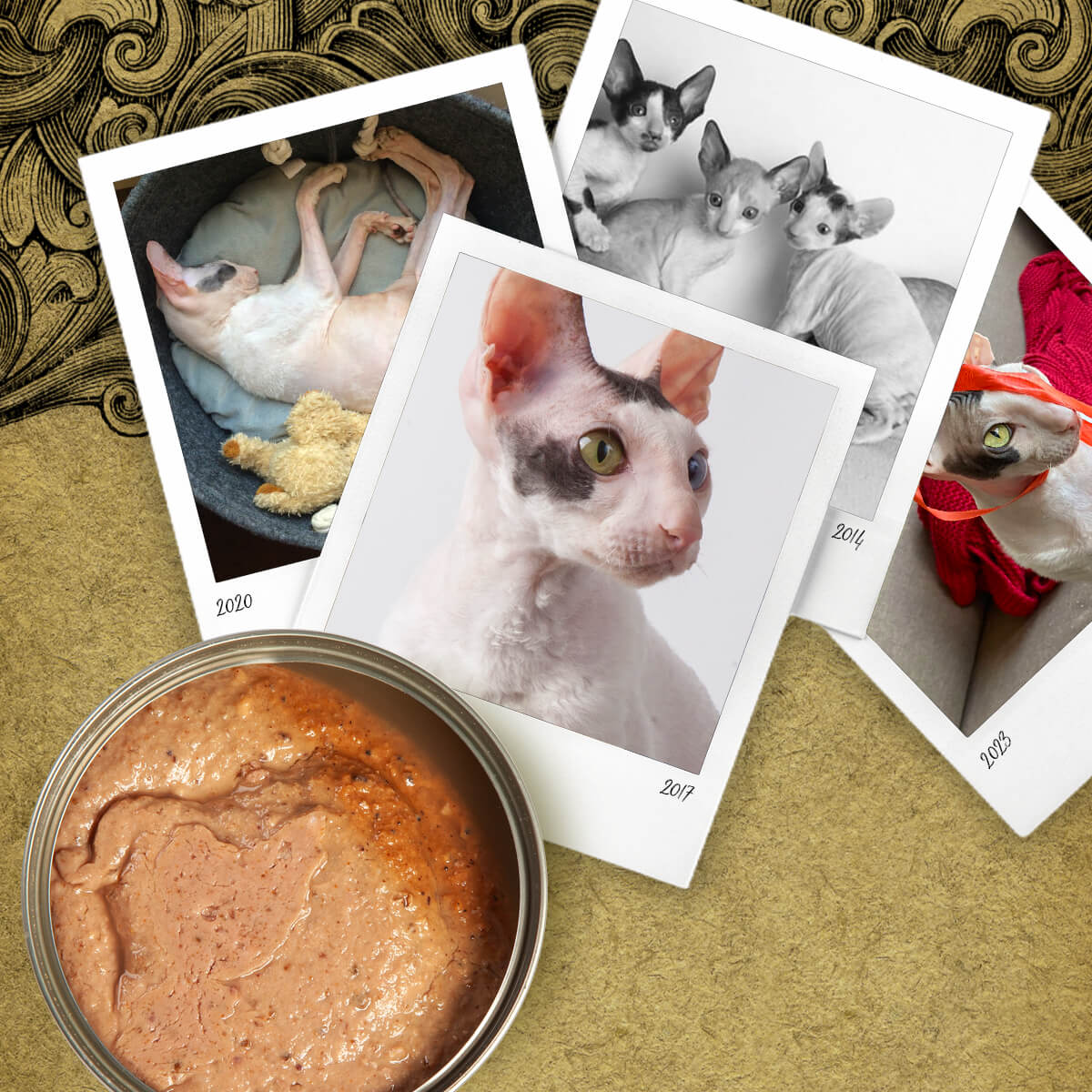
Water also plays a role in grooming and care. Some cats must be bathed regularly for health reasons. Hairless breeds such as Sphynx, Peterbald and Donskoy lack fur to absorb skin oils, which means oils build up on the skin and require weekly bathing. Cornish Rex and Devon Rex cats, with their fine coats, may also become greasy and benefit from occasional baths.
Other cats are bathed not out of necessity, but for presentation. Longhaired breeds such as Persians and Himalayans are often bathed as part of show preparation. White cats may be bathed to manage staining. In these cases, bathing is structured, gradual and done with cat-specific products that respect feline skin pH. Cats introduced to bathing gently and early in life usually tolerate it far better than those exposed suddenly as adults.
Just as not all cats feel the same about water, not all cats thrive under the same conditions. Coat type, body structure and genetics shape how a cat experiences the world. Nutrition works the same way. When we respect what a cat is designed to be, rather than what we expect it to tolerate, everyday care becomes simpler, calmer and more natural.
Cats are not one size fits all. Respecting their biology, from coat to digestion, helps them feel at ease in their bodies and their homes.

Did you know?
A natural swimmer
The Turkish Van developed near Lake Van in eastern Turkey, one of the world’s largest high-altitude lakes, sitting at 1,640 metres above sea level. The breed adapted to cold water and is one of the very few domestic cats known to swim voluntarily. Its coat repels water rather than absorbing it. By the mid 20th century, the breed was nearly extinct. In 1955, British breeder Laura Lushington brought the first breeding pair to the United Kingdom, beginning the preservation of the breed.
Bathing as care
Hairless cats such as Sphynx, Peterbald and Donskoy typically need weekly bathing. Without regular washing, skin oils accumulate, leading to blackheads, yeast infections and oily residue on furniture and bedding. Water should be lukewarm, around 38 to 39°C. Products must be formulated specifically for cats. Feline skin pH sits between 6.0 and 7.5, which differs from humans, and incorrect products can disrupt the skin barrier.
Show preparation
For longhaired show cats, bathing is usually done two to four days before an event. Bathing the day before often leaves the coat too soft and flyaway. Persians may require two baths, one to degrease and one to condition. Drying a full Persian coat can take hours using a dryer on low heat. Final grooming happens on the morning of the show. Nothing is improvised. For cats such as Russian Blues, Abyssinians or British Shorthairs, bathing is rarely needed, as their short dense coats are largely self-maintaining.