Why real hearts matter more than synthetic vitamins
February is filled with heart symbols. Valentine’s Day and Love Your Pet Day remind us to celebrate affection and connection. At 3coty®, hearts are more than decoration or metaphor. They are a real ingredient in our food, and they represent something very specific about how we approach feline nutrition. When we speak about heart, we are speaking about biology, evolution and the kind of nutrition a carnivore is built to thrive on.
When a cat hunts in the wild, it does not begin with random bites of muscle meat. Predators instinctively consume the organs first, including the heart and liver, because these parts are the most nutrient dense. This behaviour reflects millions of years of evolutionary selection directing cats toward the richest available sources of essential nutrients. Heart is technically a muscle, but it is unlike any other muscle in the body because it works continuously from birth to death. That relentless workload results in unusually high concentrations of taurine and other critical compounds stored in the tissue.
Taurine is an essential amino acid for cats, and they cannot synthesise sufficient amounts on their own. It is fundamental for heart muscle function, retinal health, bile salt formation for digestion, immune stability and proper development. In 1987, a landmark study published in Science revealed that thousands of cats had developed dilated cardiomyopathy due to taurine deficiency in commercial cat food. The cause was simple. The formulas did not contain enough real meat to provide adequate natural taurine. To understand the magnitude of the difference, chicken breast contains roughly 18 mg of taurine per 100g, while chicken heart contains around 170 mg per 100g. The contrast becomes even clearer when comparing different species, as dark meat turkey can exceed 300 mg per 100g, while beef heart typically contains around 60 to 70 mg per 100g. The biological pattern is consistent. Animals with higher metabolic intensity and greater cardiac workload store significantly more taurine in heart tissue.
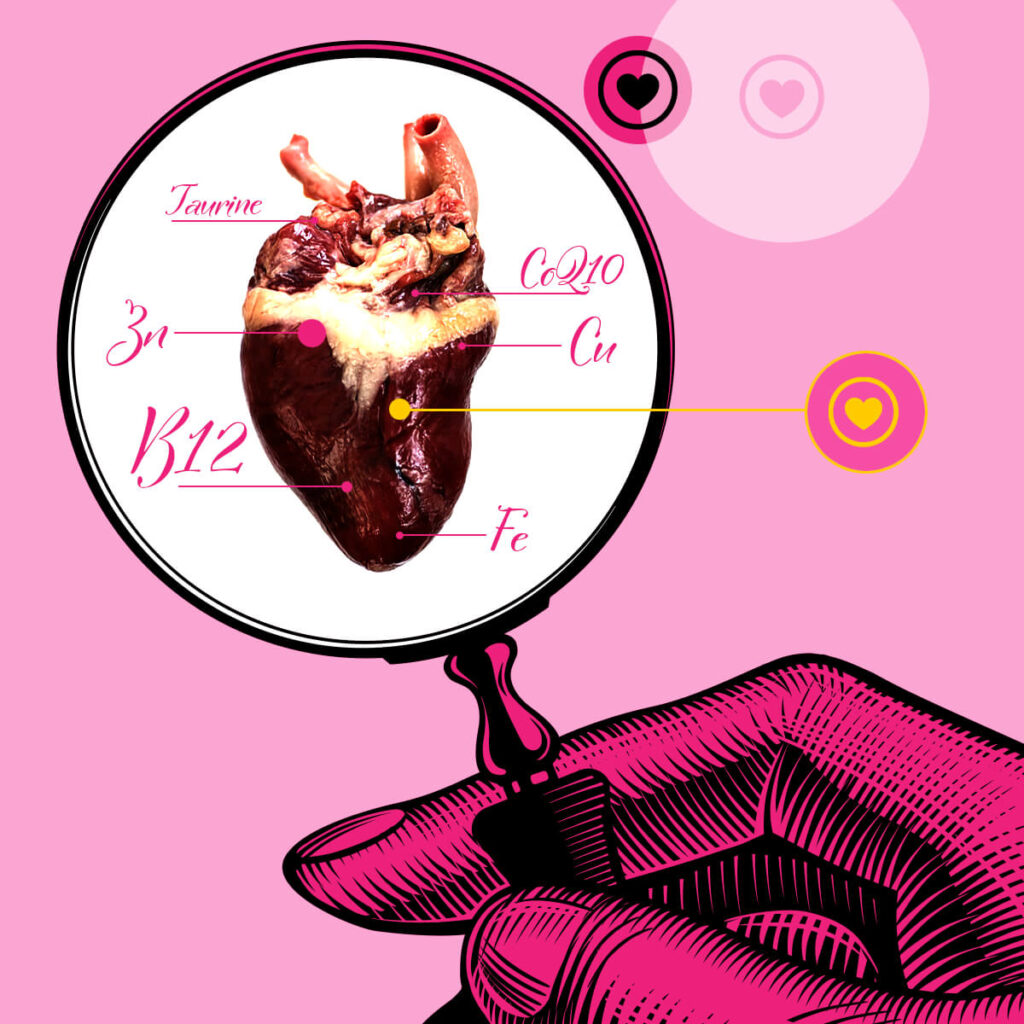
Heart tissue also provides far more than taurine. It is rich in CoQ10, which supports cellular energy production, and vitamin B12, which is essential for nerve health and red blood cell formation. It contains highly bioavailable heme iron, zinc, copper and structural proteins such as collagen and elastin that support joints and connective tissues. Many commercial foods rely heavily on vitamin premixes because high temperature processing can reduce naturally occurring nutrient levels. Taurine is water soluble and sensitive to processing conditions, which makes careful formulation essential to ensure stability in the finished product.
At 3coty®, we take a different approach. We use real chicken hearts, turkey hearts, duck hearts and goose hearts as part of our recipe, allowing nutrients to be delivered in their natural, bioavailable form. Hearts are among the richest natural sources of taurine, and in our recipes they make up to 20% of the total composition. That proportion is intentional. A balanced formulation matters just as much as ingredient quality, and organ meat must be used with precision.
Because our formulation is built around real, nutrient rich ingredients and because the broth remains part of the final product, water soluble nutrients are preserved rather than discarded. At the same time, we choose to add a carefully controlled amount of taurine as an additional safeguard. Taurine can be sensitive to heat and processing variables, and responsible formulation means ensuring consistent levels in every single can. Natural abundance forms the foundation. Supplementation provides stability.
Love is not only expressed in gestures and symbols. It is expressed in the quality, balance and integrity of what you choose to place in your cat’s bowl.
Nature already designed the solution. We simply put it in the can.

Did you know?
A wild cat catches and eats approximately six to ten small prey animals a day, and each one contains a heart, a liver and a complete set of organs that are consumed as part of a natural feeding pattern. Organ meat is not an occasional addition in a carnivore’s diet. It is a consistent and biologically expected source of concentrated nutrition. At 3coty®, we use hearts from four different birds, chicken, turkey, duck and goose, to deliver organ rich nutrition aligned with what nature intended in every can.