…is cat stool a taboo subject?
Whether you call it poop, stool, or faeces, it is the same thing, and it tells you more about your cat than almost anything else. Cat stool is one of those topics everyone notices, worries about, and quietly checks, but rarely talks about openly. It sits somewhere between embarrassment and concern, even though it is one of the most direct and honest signals of how a cat’s body is functioning. What appears in the litter box often causes more anxiety than it deserves, largely because expectations are shaped by human habits rather than feline biology. For cats, stool is not a daily performance. It is a byproduct of digestive efficiency.
Understanding what is normal for a cat helps replace panic with perspective and turns observation into something useful rather than stressful.
What “normal” stool looks like for a cat
Cats are obligate carnivores, and their digestive system is designed to extract nutrition efficiently from animal-based food. When digestion and absorption work as intended, most nutrients are absorbed before they ever reach the large intestine. This leaves relatively little material to be excreted. As a result, healthy cats on a meat-only or B.A.R.F. style diet often produce smaller, firmer stools than people expect. A bowel movement every 24 to 36 hours can be entirely normal for an adult cat. This is not constipation. It is a sign that the body is using what it is given and leaving little behind.
Frequency alone is not a reliable indicator of digestive health. What matters more is ease. Normal stool should pass without visible straining, discomfort, or distress. A cat that moves comfortably, uses the litter box normally, and shows no signs of pain is not constipated simply because it does not defecate twice a day.
Why expectations are often wrong
Many concerns around cat stool come from comparisons with humans or dogs. Humans excrete waste daily because a large part of our diet consists of material that is not fully absorbed. Dogs, as omnivores, also produce larger and more frequent stools than cats. Applying these expectations to cats leads to unnecessary worry.
Cats eating highly digestible food produce less waste. Less in leads to less out. This is not a problem to be fixed. It is the natural outcome of a digestive system built for efficiency rather than volume.
How carbohydrates and additives change the picture
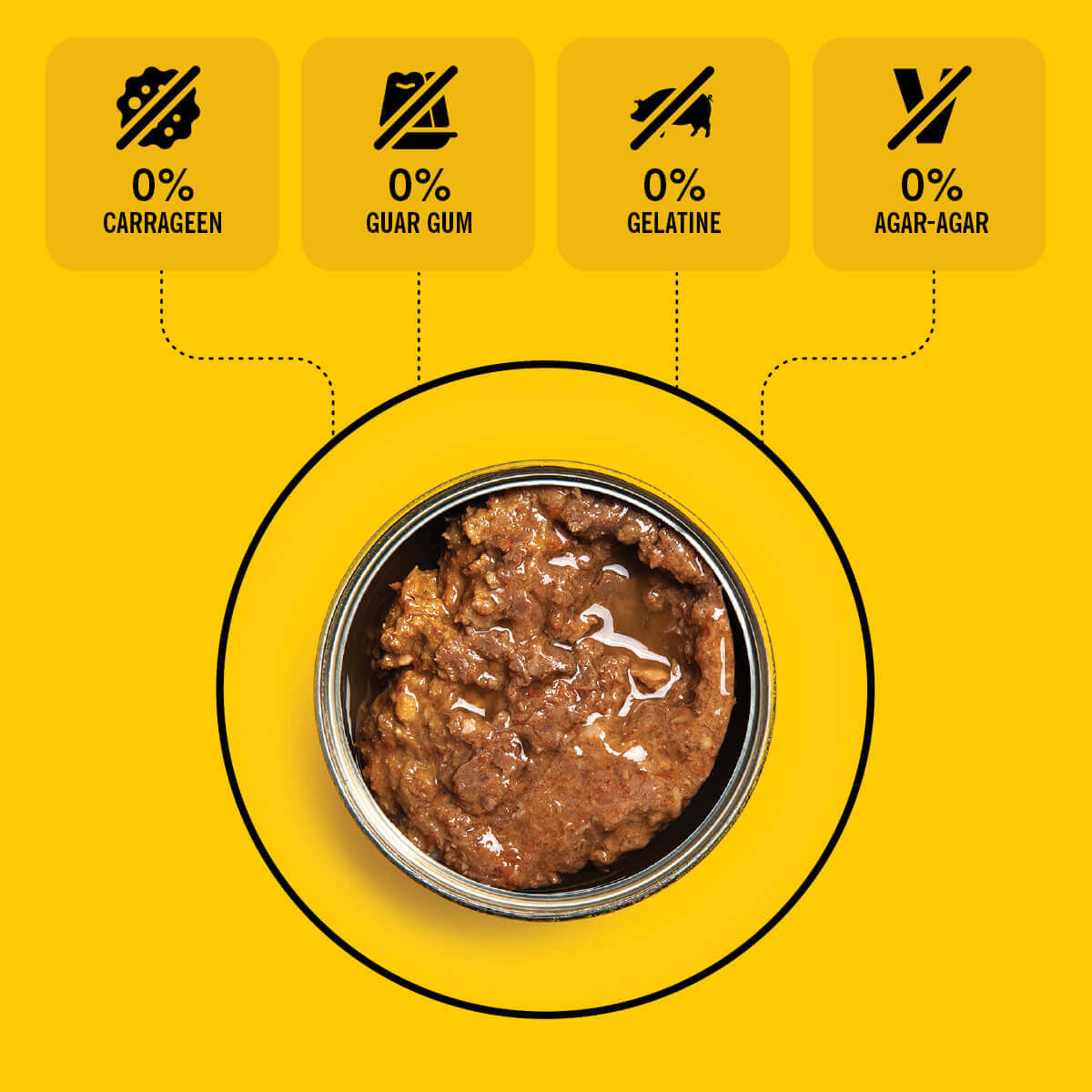
Diet composition has a direct impact on what reaches the large intestine. Ingredients such as carbohydrates, grains, soya, and certain technological additives are not digested and absorbed in cats in the same way as animal-based nutrients. When these components pass through the small intestine only partially processed, they arrive in the colon in larger amounts.
This shifts how the digestive system works. More material is left for bacterial processing, more water is retained, and stool volume often increases. In some cats, this can lead to softer stools, stronger odour, gas, or more frequent bowel movements. These changes are not signs that the cat suddenly became unhealthy. They reflect a digestive system being asked to handle material it was never designed to prioritise. When digestion finishes early, stool is smaller and firmer. When more material reaches the colon, stool becomes bulkier and less predictable. Understanding this connection helps explain why food composition matters, without turning stool changes into a source of fear.
Why stool changes when food changes
When a cat’s diet changes, stool often changes with it. This is a normal response, not a failure. Shifts in digestion, absorption, water handling, and microbial activity all influence stool consistency, size, and smell. During adaptation, stools may temporarily become softer, firmer, smaller, or less frequent. These changes usually settle once the digestive system adjusts. What matters is the overall pattern. A calm transition with a stable, comfortable cat is very different from ongoing discomfort, pain, or a complete absence of bowel movements over several days.
Understanding digestion and absorption helps explain why these changes happen. When more nutrition is absorbed upstream, less material reaches the colon. When absorption improves, stool volume often decreases. This is not a sign of something missing. It is a sign of something working.
When stool really deserves attention
While variation is normal, certain signs should not be ignored. Straining, vocalising, repeated unsuccessful attempts to defecate, visible pain, lethargy, or a sudden and persistent change in behaviour are reasons to pay closer attention. Context matters as well. Age, hydration, stress, illness, and body condition all influence how a cat handles waste. The key is balance. Observing stool is useful. Obsessing over it is not.
What nature tells us
In nature, cats eat prey that is rich in water, protein, and fat, with very little indigestible material. This leads to efficient digestion, minimal waste, and infrequent bowel movements. Domestic cats may live indoors, but their biology has not changed. Their digestive system still reflects this evolutionary design. In wild cats, stool volume does not scale with body size but with how much of a meal cannot be digested and absorbed. Understanding this helps shift the focus from how often a cat uses the litter box to how well their body is functioning overall.
What this looks like on a meat-only diet
On a meat-only diet, the outcome becomes remarkably consistent. With no carbohydrates, no plant-based fillers, and no excess material passing through the digestive system, stool reflects the way a cat’s biology is designed to function. In practical terms, stools are typically small, well-formed, and stable. The shape is clear, the consistency firm without being dry, and the colour a uniform dark brown. There is little day-to-day variation, because there is little variation in what the body needs to process. This kind of consistency is not engineered. It is what happens when digestion is not interrupted by unnecessary inputs.
Most nutrients are absorbed before reaching the large intestine. Very little remains to be processed, which is why stool volume stays low and predictable. Odour is reduced, bulk is minimal, and fluctuations are rare. For some cats, particularly those with a tendency towards slower bowel movements, natural fibres such as brown algae can support regularity without altering the underlying pattern. The aim is not to increase volume, but to support movement while maintaining efficiency.
This is where expectation often needs to shift. Smaller, firmer, and less frequent stool is not a sign of something missing. It is a sign that very little is being wasted, which is exactly what a natural meat-only approach such as 3coty® is designed to support.

Did you know?
Wild cats rarely produce large or frequent stools. Lions, tigers, and other big cats often defecate only every one to two days, depending on meal size. After a large feed, it is normal for them to pass little or nothing the following day. This is not constipation, but efficiency.
Covering stool is also common across many cat species. Smaller wild cats typically bury their faeces to avoid leaving scent that could attract predators or competitors, while larger cats may use stool placement strategically for territory marking. In both cases, the behaviour is driven by survival instincts rather than cleanliness or shame.
Domestic cats retain these instincts. Smaller, firmer stools and less frequent bowel movements reflect a digestive system designed for meat, not for volume.