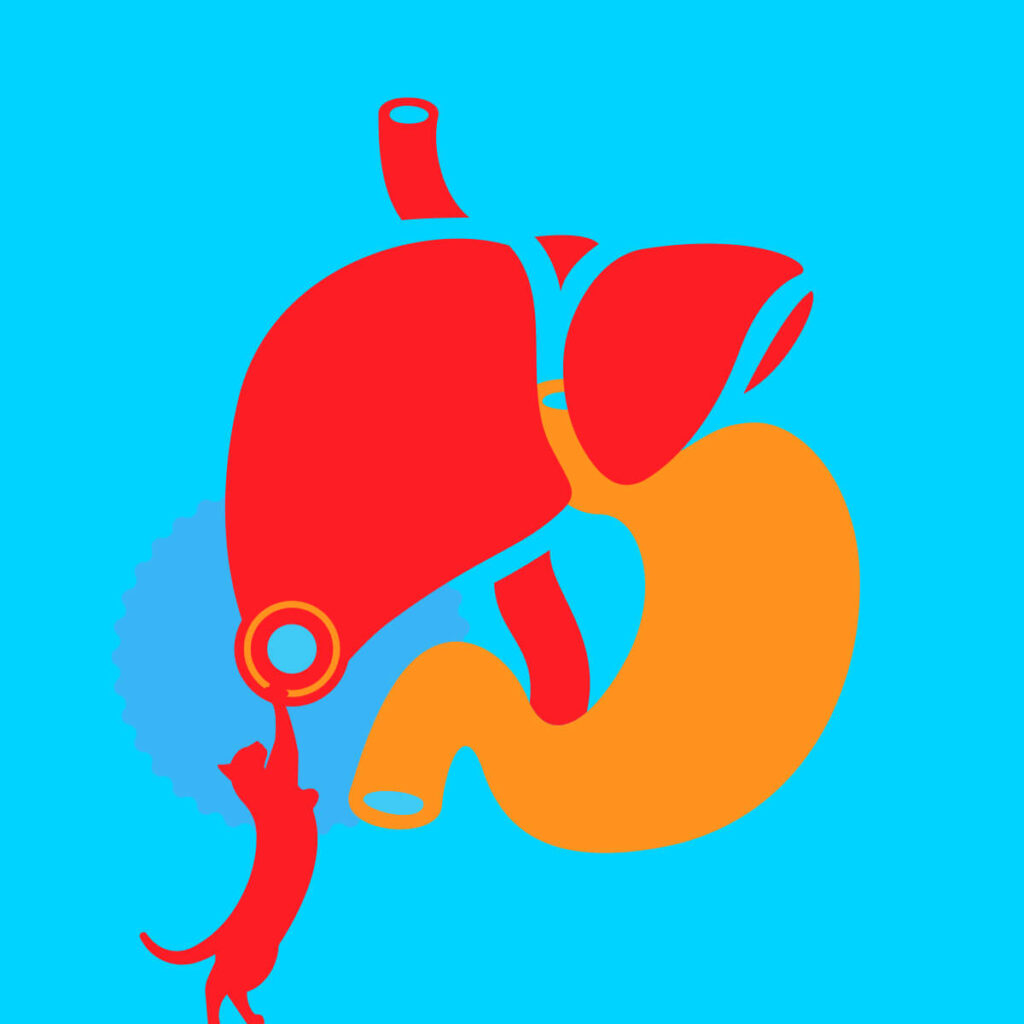
The silent organ behind your cat’s metabolism
The liver does not meow when it is in trouble. It does not swell visibly, bleed, or limp, and yet it is one of the most critical organs in your cat’s entire body, responsible for converting nutrients, neutralising toxins, storing energy, and keeping nearly every metabolic process running smoothly. Most cat owners never think about their cat’s liver until something goes wrong, and when it does, it often happens fast. This article explores what the liver actually does, how it changes over a cat’s life, what risks it faces, and how to protect it through better awareness and biologically appropriate nutrition.
What the liver really does and why it matters
The liver is a metabolic powerhouse. Everything your cat eats passes through this organ before reaching the rest of the body, where nutrients are filtered, evaluated, and either converted, stored, or detoxified. In this way, the liver acts as both a gatekeeper and an engine, deciding what fuels are safe and what the body needs to thrive.
One of its key roles is managing energy through glycogen storage. When your cat is fed, excess glucose is stored in the liver as glycogen. During fasting, play, hunting, or stress, that glycogen is converted back into glucose and released into the bloodstream to supply energy where it is needed most. The liver also produces bile, a greenish fluid essential for digesting fats and absorbing fat soluble vitamins. Without bile, your cat’s digestive system would struggle to make use of many of the nutrients in food, especially vitamin A and essential fatty acids.
The liver is also responsible for detoxification, processing natural metabolic waste as well as environmental toxins or drugs and making them safe for elimination. In addition, it synthesises proteins for healing, blood clotting, and immune response, regulates cholesterol and lipids, stores vital micronutrients such as iron, copper, and vitamins A, D, E, and K, and plays a role in breaking down old red blood cells. Its wide reaching role means that when the liver begins to fail, the effects are widespread, affecting digestion, energy, immunity, and even the nervous system.
Fast facts about the feline liver
- Cats have one liver, located just behind the diaphragm and divided into multiple lobes.
- It makes up around 3-4% of a cat’s body weight, proportionally larger than in many mammals.
- The liver performs more than 500 vital functions, including digestion, hormone regulation, and immune support.
- The liver is one of the few organs capable of regeneration, but only if the underlying damage is corrected in time.
- Cats are uniquely vulnerable to liver stress during fasting because of how their bodies metabolise fat.
When fat takes over: hepatic lipidosis
One of the most serious liver disorders in cats is hepatic lipidosis, also known as fatty liver syndrome. This condition arises when fat accumulates inside the liver cells, overwhelming them and interfering with normal liver function. What makes hepatic lipidosis particularly dangerous is how easily it can be triggered. Often, the starting point is simply that a cat stops eating, whether due to stress, illness, change in food, or pain.
Unlike other animals, cats are not built to handle periods of fasting. When food intake stops, the body sends stored fat to the liver to be converted into energy. In cats, the liver struggles to process large amounts of fat. Instead of breaking it down, it stores it, and the liver begins to clog from within. This leads to a rapid decline in liver function. Within days or weeks, a cat can develop severe lethargy, vomiting, jaundice, and even collapse. If untreated, the condition is often fatal. Recovery requires intensive veterinary support, usually through assisted feeding, fluids, and long term nutritional management.
Fatty liver syndrome is most common in overweight cats or those with underlying health conditions, but it can affect any cat that stops eating. The key to prevention lies in maintaining a consistent diet, avoiding stress where possible, and acting quickly when appetite disappears.
More than fat: inflammation, hepatitis, and chronic liver disease
Not all liver disease in cats is related to fat accumulation. Cats are also susceptible to inflammatory liver disorders, including hepatitis and cholangiohepatitis, a condition in which both the liver tissue and bile ducts become inflamed. These conditions may arise from infections such as toxoplasmosis, autoimmune reactions, or the spread of inflammation from the pancreas or intestines.
Unlike hepatic lipidosis, these chronic conditions may develop gradually, with less dramatic symptoms. A cat might show occasional vomiting, poor coat quality, weight loss, or mild jaundice, signs that are easily mistaken for other issues. Diagnosis often requires bloodwork, ultrasound, and in some cases a liver biopsy. Chronic hepatitis can eventually lead to fibrosis and permanent loss of liver function. Treatment typically involves long term dietary management and medication depending on the underlying cause.
Because cats are so stoic, many liver conditions go unnoticed until they are advanced. This makes dietary support and routine monitoring especially important in older or high risk cats.
Inherited liver conditions in cats
Although rare, some cats are born with liver disorders that interfere with normal function. One of the best known is portosystemic shunt, a congenital abnormality in which blood bypasses the liver instead of flowing through it. Because detoxification does not occur properly, toxins accumulate in the body and can affect the brain.
Kittens with portosystemic shunts may be small for their age, show poor appetite, or display neurological symptoms such as head pressing, tremors, or disorientation. In some cases, surgery or specialised dietary therapy can help manage or correct the condition. Other inherited conditions include glycogen storage disorders, in which sugar cannot be stored or released properly, and copper associated hepatopathy, where copper accumulates in the liver and causes damage over time. These disorders are often breed related and may require lifelong nutritional management.
How liver function changes across a cat’s life
Liver development in kittens
At birth, a kitten’s liver is still developing. Although present and active, it is not yet capable of managing the full range of metabolic demands seen in adult cats. During the first weeks of life, liver cells gradually begin to produce bile, store glycogen, and process toxins, but only at a limited capacity.
This biological limitation explains why kittens rely entirely on milk in the early weeks. Their liver is not equipped to handle complex proteins, fats, or fat soluble vitamins found in solid food. Introducing these nutrients too early can overwhelm the system and lead to digestive or developmental issues. Around three to four weeks of age, the liver becomes more functional. Enzyme activity and bile production increase, allowing the kitten to begin weaning. At this stage, soft animal based foods such as mousse textured meat can be introduced, providing digestible nutrition that supports growth without stressing the liver. This transition must be gentle and biologically appropriate.
The aging liver: what senior cats need
In older cats, liver efficiency begins to decline. Regeneration slows, and the organ becomes more sensitive to inflammation, scarring, and nutrient imbalances. Senior cats are also more likely to receive medications, many of which are processed by the liver, increasing its daily workload. Common signs of liver strain in older cats include subtle weight loss, changes in appetite, poor coat quality, or intermittent vomiting, symptoms that are often dismissed as normal aging.
Nutritional support becomes especially important at this stage. Senior cats benefit from highly digestible animal proteins, clean sources of energy from fat, and the absence of unnecessary fillers or additives. Avoiding synthetic preservatives, colourants, and excessive supplementation is critical, as the aging liver may struggle to process these substances. Feeding senior cats a pure, meat based diet rich in natural micronutrients and free from artificial stressors is one of the most effective ways to support liver function into old age.
Toxins and overload: how the liver becomes a battleground
The liver is designed to protect the body from harm, but when exposed to too many toxins or forced to break down substances it is not equipped for, it can become overwhelmed. Many substances harmless to humans are dangerous to cats because of how their livers function. Acetaminophen, also known as paracetamol, is highly toxic to cats. So are many non steroidal anti inflammatory drugs, certain antibiotics, and anabolic steroids.
Environmental toxins pose similar risks. Lilies are particularly dangerous, as even a small amount of pollen can cause acute liver and kidney failure. Other toxic plants such as sago palm and foxglove also place heavy strain on the liver. Household cleaners, insecticides, and mouldy food can further add to the burden.
One lesser known source of liver stress is overfeeding certain foods, particularly liver itself. While raw liver is rich in valuable nutrients, it also contains very high levels of vitamin A, a fat soluble vitamin that is stored in the liver and not easily excreted. When fed too often or in excess, vitamin A can accumulate and lead to hypervitaminosis A, causing bone deformities, stiffness, skin issues, and liver damage. This condition is often the result of well meaning but unbalanced feeding practices.
The message is clear. The liver is resilient, but not invincible. Its detoxifying capacity is powerful only when given manageable conditions.
Feeding the liver: how nutrition can support or sabotage liver health
Nutrition is one of the most effective tools for protecting liver health and supporting its daily workload. Cats are obligate carnivores and rely on animal protein and fat to meet their energy needs. Unlike omnivores, cats are not efficient at processing plant based nutrients. Diets that contain grains, starches, or vegetable oils can increase the liver’s metabolic burden and create imbalances over time, contributing to fat accumulation, inflammation, or vitamin overload.
At 3coty®, we create food based on feline biology. Our meat only recipes deliver high quality animal proteins that supply amino acids essential for liver repair, enzyme production, and detoxification. Natural animal fats provide clean, appropriate energy without the strain of carbohydrate conversion. Balanced organ meats such as heart and liver are included in controlled amounts to supply natural sources of vitamin A and B complex vitamins without the risk of excess. No grains, plant oils, colourants, or synthetic preservatives are added, reducing unnecessary stress on the liver.
A well nourished liver is a protected liver. Regular, balanced, additive free nutrition supports energy regulation, detox pathways, and vitamin absorption, allowing the liver to do what it is designed to do without struggle.
Supporting what works behind the scenes
Your cat’s liver does not complain. It works continuously to support digestion, detoxification, immunity, hormones, and energy regulation. Because it is silent, it is easy to overlook. Fasting, toxins, poor quality food, and genetic vulnerabilities can compromise liver function long before obvious signs appear. Understanding how the liver works and supporting it through biologically appropriate nutrition is one of the most powerful ways to protect your cat’s long term well-being.
At 3coty®, we believe nutrition should support biology, not challenge it. When it comes to the liver, feeding in line with a cat’s natural design can make a meaningful difference.