Why sugar has no place in a cat’s diet
To fully understand why there is no sugar in 3coty®, we need to remember that the human diet and the feline diet are two completely different things.
We know that fruit and vegetables are healthy and full of nutrients in our diet. In recent years, there has been growing discussion about whether rye bread is healthier than white bread, or potatoes better than carrots when watching our figure.
That is for us, the humans.
Cats, even though they live with us, are different. They are 100% carnivores. That means they should only eat meat. Some may argue that wild cats living in the woods and hunting mice, birds and small rodents are true carnivores, while domestic cats are different. But are they really? Humans may have changed cats’ habits by domesticating them, but this change was not physiological. Their metabolism has not adapted to drastic environmental changes. They are still carnivores, and their bodies are not built to process vegetables or grains as part of their regular diet.
So what is all the fuss about sugar?
The white substance we add to our morning coffee or use when baking birthday cake is sugar. In this form, it is called sucrose. Sucrose is a disaccharide, a chemical compound made of two monosaccharides, also known as simple sugars – glucose and fructose.
There are three simple sugars – glucose, fructose and galactose. Different combinations of these form disaccharides (such as sucrose). When many simple sugars are bonded together, they form oligosaccharides or polysaccharides.
Without diving into too much biochemistry, sugars are essentially carbohydrates – or more precisely, carbohydrates are often referred to as sugars. In everyday language, these terms are used interchangeably. In general, we use “carbohydrate” to describe “sugar” present in food. Cereals, bread, pasta, sweets, jam and desserts are all rich in carbohydrates or sugar.
We are also increasingly aware that sugar and carbohydrates are not good for humans. A high intake of carbohydrates can lead to many illnesses, including diabetes, obesity and cancer.
Monosaccharides, or simple sugars, are the main fuel source for metabolism. Glucose is the most important of them. When sugar is consumed but not needed immediately, it is stored as a polysaccharide – a more compact form. In humans and many other animals, this storage form is called glycogen and is stored in the liver and muscles. In plants, it is converted to starch for the same purpose.
Cats are obligate carnivores. Their diet should be 100% meat-based. Carbohydrates are not essential for them, as they rely on nutrients from animal tissue – mainly protein and fat. A cat’s need for glucose, their primary energy source, can be met by metabolizing components found in animal tissue. This includes breaking down triglycerides and certain amino acids, which can be converted into glucose. A diet rich in protein and fat is therefore a highly efficient energy source for cats.
Sugars are not required in a feline diet. When included, they are stored as fat and can lead to serious health issues like diabetes, obesity, hepatic lipidosis (fatty liver syndrome), or even cancer.
New trends – grain free
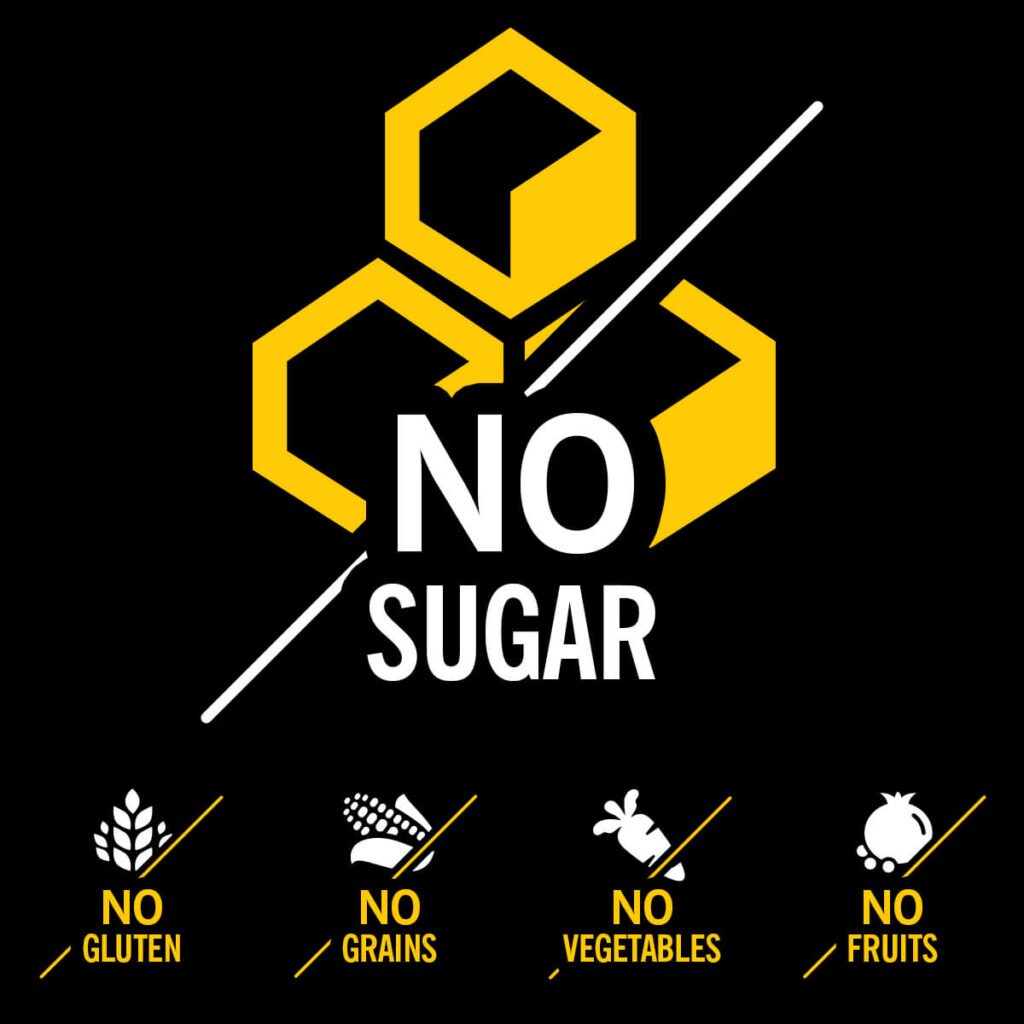
Grains such as wheat, rice, oats, cornmeal and barley are rich in carbohydrates and should not be present in a cat’s diet. Because they are cheaper than meat, they became a common component in many commercial cat foods.
More recently, many brands have introduced “Grain Free” options. But “Grain Free” does not mean zero carbohydrates. That’s because carbohydrates are also found in starchy vegetables like potatoes, corn or peas – all of which are often used in dry cat food.
Checking the label
This is why it is so important to read the label and understand the ratio of meat to carbohydrates in any ready-made cat food. Just like with humans, a cat’s diet affects their health, quality of life, and longevity. Long-term feeding with high-carbohydrate food should be limited or avoided to reduce the risk of chronic illness.
3coty® natural cat food is formulated to meet the requirements of an obligate carnivore diet. It is a supportive choice for cats with diabetes, obesity or other conditions where a sugar- and carbohydrate-free diet is essential.